
Reporting by Laura Daley, Eva Danayanti and Jenna Sampson
Finding emergency shelter is the beginning of a complicated journey for anyone. But for youth who are in the process of understanding their gender identity or sexuality, it is even harder.
Openly identifying as LGBTQ is becoming more and more prevalent. A study from the J. Walter Thompson Innovation Group found that 56 percent of youth ages 13 to 20 know someone who identifies with non-gendered pronouns such as “they” and “theirs” as opposed to only 43 percent of their older counterparts (ages 28 to 34).
One in five transgender people has experienced homelessness at some point in their life, according to the National Transgender Discrimination Survey. While the LGBTQ population has traditionally experienced disproportionate rates of homelessness when compared to their heterosexual peers, transgender members of this community face a different set of challenges, barriers and obstacles.

Within the shelter system, many people identifying as transgender experienced discrimination such as being turned away completely or forced to live as the gender with which they did not identify in order to stay.
Up to 40 percent of the youth experiencing homelessness identify as LGBTQ, though they only comprise about 7 percent of the general youth population. Data compiled as part of McKinney-Vento program, which provides educational support for youth experiencing homelessness, identified almost 22,000 young people experiencing homelessness in Colorado in 2017.
Boulder County accounted for 1,095 of them.
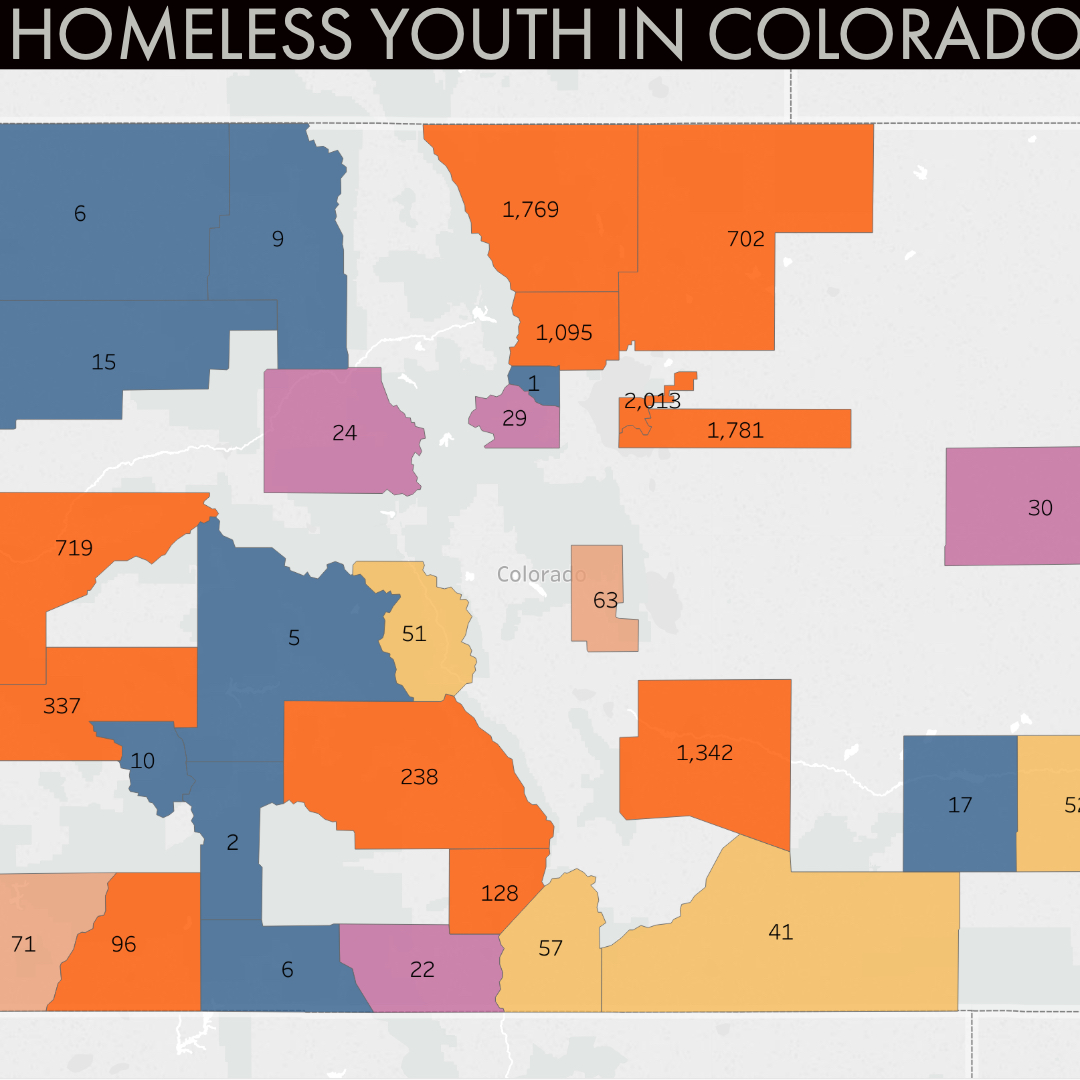
Attention Homes, a youth shelter in Boulder known for its welcoming and inclusive environment, served over 700 individual youth in 2015 — a number that most people find extremely surprising according Megan Bruce, the runaway and homeless youth program and housing manager.
“I think that Boulder doesn’t seem like a place that would have so many homeless youth,” said Bruce. “I think there’s definitely a need…for some more awareness around what’s going on in this community.”
The LGBTQ population is particularly vulnerable to losing their home based on familial issues that occur after coming out. One half of all teens receive a negative reaction from their parents when they share this information, according to the True Colors Fund, a national organization dedicated to improving support systems for LGBTQ youth experiencing homelessness.

Nearly 35 percent of the youth at Attention Homes identify as LGBTQ.
Heather Crate, the director of the Boulder County Open and Affirming Sexual Orientation and gender identity Support program, cited family acceptance of LGBTQ youth as the most prevalent factor in preventing these youth from entering homelessness. Additionally, the older youth that the program serves experience more discrimination when looking for employment and livable wages, which can quickly lead to homelessness.
“Of those 35 percent, over 50 percent identify a major contributing factor of their situation being asked to leave home because of their sexuality or gender identity,” Edmond said. “Further education in the community is super important in helping break down those barriers and making folks understand some of the issues that these guys face.”

Within the youth LGBTQ population, different groups have identified different needs. Transgender youth face institutional erasure, or the exclusion of their identities through “lack of policies that accommodate trans identities or trans bodies, including the lack of knowledge that such policies are even necessary” within shelters, according to a 2018 article in Child Welfare. Many shelters simply don’t know how to address the needs of this population in sensitive and mindful ways.
Local and national shelters often employ policies that transgender individuals must present a state-issued ID that matches their presented gender identity in order to receive services. Though shelters like the Sacred Heart House of Denver and Samaritan House self-identify as inclusive, their ID policies can pose barriers for transgender individuals.
According to Blake Edmond, Outreach Coordinator at Attention Homes in Boulder, having an ID can be an obstacle for youth experiencing homelessness. Many of their clients have had their possessions stolen due to sleeping outside.

“You get everything stolen at first,” said Chris. “When it happens, it’s very hard to get your ID back…So you have to go through hoops like you have to get a notarized copy of your medical records and then they’ll give you your social security card. Then, you have to take that notarized copy of your medical records and your social security card, and you have to get your birth certificate.”
The process goes on and on, with individuals having to visit multiple offices for multiple forms of identification and verification in order to get a new ID.
Even if someone has an ID, updating sex identification can be yet another challenge for transgender individuals. In order to update this section of a Colorado ID, the individual must submit Medical Information Form DR 2083. This form requires a medical provider to sign off on the change For many youth, especially those experiencing poverty and homelessness, this requirement is unattainable. Additionally, there are fees associated with receiving a new license and individuals must sit for a new photo.
Only 8 percent of the respondents to the U.S. Transgender Survey report for Colorado said that all of their forms of identification matched their preference, name and gender identity in 2015. 70 percent said none of their documents matched these preferences, with cost being the biggest barrier to updating these documents.

Urban Peak, a youth shelter with locations in Denver and Colorado Springs, puts youth in contact with organizations who can help alleviate the cost of these changes. About 26 percent of the youth they serve identify as lesbian, gay or bisexual with 2 percent identifying as transgender and intersexed. Their staff receives training on the name changing and gender changing process for IDs from a local lawyer, said Ramsey Cox, the assistant supervisor for the shelter program.
Colorado is one in a small group of states now offering an “X” option for sexual identification on licenses. This option increases inclusivity and recognition of people outside the gender binary and does not require a medical form.
Neither Attention Homes nor Urban Peak require identity documentation for youth staying at the shelter. This eliminates a considerable restriction, especially for transgender youth.
“We try not to let that be a barrier because not having an ID is barrier enough,” Edmond said. “That’s one of the first things we work with people to obtain because without an ID, you can’t really do a lot.”
There are other ways that shelters can verify age and identity for youth, whether it’s through parental verification, communication with schools or getting in touch with a prison.
Attention Homes upholds a zero-tolerance policy for discrimination and violence. Throughout the space, rainbow flags, rainbow-painted walls and signs denoting a “Safe Space” reiterate the high value they place on inclusivity and fair treatment. The “rainbow room,” a small area with multicolor walls located at the entrance of the drop-in center at Attention Homes, serves this purpose.

Carrying all your belongings means you can get everything you own stolen from you in one night on the street. 
“As a bum, you get everything stolen at first.” Chris explained the hurdles of searching for work while homeless. 
Osha wakes up for lunch. 
Shelters typically kick visitors out in the morning and readmit them in the evening, which means they have to spend the day outside. 
Sack lunch delivery from two good Samaritans
“It sets the tone when someone first walks into this space that this is an inclusive zone,” Edmond said. “It also lets people know that we don’t accept intolerance here.”
The presence of these objects as well as books and movies that represent queer identity is an important aspect of creating an inclusive space, said Crate.
The biggest difference between transgender needs and the needs of their LGB peers is that transgender youth identify transition-related to support as one of their most prevalent necessities, according to the True Colors fund. Attention Homes provides this support in a few ways.
“We can help with binders and referring youth to hormones or any other sort of medical services they might need,” said Bruce. “We have a great relationship with People’s Clinic, which is just down the street and come in here once a week and meet with youth.”
Urban Peak has also identified STI prevention as an additional need for this population. They ensure their clients have access to pre-exposure prophylaxis, which serves as a measure for preventing HIV, Cox said.
At both Urban Peak and Attention Homes, youth are able to choose if they want to stay on the female or male floor at the home based on identity and preference.
”We often encounter people who are gender fluid,” Edmond said. “So they might start their stay here staying in the male floor and then throughout their stay here they kind of start identifying more as female, so they can move up to whichever floor they feel most comfortable with.”
Accessing services that meet their needs can be especially difficult for individuals who do not identify as male or female. It can force them to bring their gender identity into public view when they are not yet ready.
“A lot of places we work with will do this sort of ‘well, a transgender student or youth can just have their own space,’ and oftentimes that can be very outing and very isolating,” said Crate. So [we need to be] thinking about how we integrate young trans and nonbinary people and not make them feel additionally othered.”
Similarly to Attention Homes, Urban Peak allows youth to stay where they feel most comfortable. They have labeled their dorms as “one” and “two” rather than solely defining them as “female” or “male” to further include youth who do not identify with solely one gender.
“If we really have someone who is just really feeling confined by those spaces or kind of what those spaces bring, even if we don’t label them as female or male… then we have to kind of get creative,” Cox said. “We have alternative rooms. We use them for a whole slew of things… But we can also use those spaces for people who are really not feeling comfortable identifying with either of those sleeping spaces.”

Crate cites trainings like those offered by OASOS as one of the best ways to prepare all levels of shelter staff to be supportive of diverse gender identities and sexualities. Detailed workshops on understanding pronouns and the experiences of homeless queer youth can be most effective in helping shelters create policies that effectively serve diverse clients.
“It’s easy to look at sort of these staggering statistics and think that all things are doomed,” Crate said. “But young queer youth are leading some amazing movements in our country and our region.”
 Sanctuary Off the Street